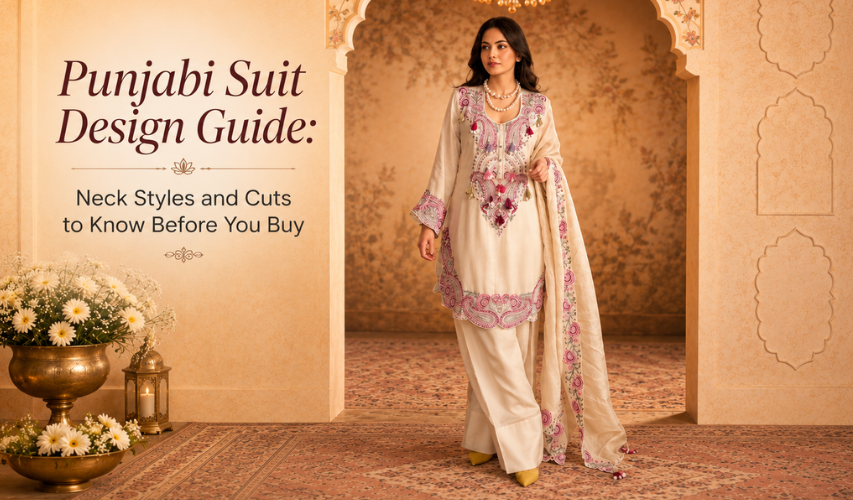
The right punjabi suit design starts with the neckline, since it decides both comfort and how the outfit sits on the shoulders. Round necks, boat necks, and keyhole cuts are the three most requested styles at Indian Cloth Store, each suited to a different body type and occasion. Knowing which cut works before placing an order saves a buyer from alterations after stitching on any Punjabi suit.
Why Neck Design Matters More Than Fabric Choice
Buyers often focus on fabric and colour first, but the neckline is what decides how the suit fits and photographs. A neckline that sits wrong on the shoulders can make an otherwise well-stitched suit look loose or tight in the wrong places.
- It determines how much jewellery the outfit can carry
- It affects how the suit looks in both sitting and standing positions
- It changes the amount of fabric needed at the yoke
- It influences whether the suit reads as formal or everyday wear
- It affects how the dupatta drapes across the shoulders once worn
Common Neck Styles in Punjabi Suit Design
Each neckline style suits a different frame and use case, from daily wear to festive functions.
- Round neck: A close-fitting collar that works for daily wear and office use
- Boat neck: A wide, horizontal cut that suits narrow shoulders and adds width
- Keyhole neck: A small cutout below the collarbone, common in festive and party wear
- Chinese collar: A stand-up collar often paired with a straight cut salwar suit for a formal look
- Sweetheart neck: A curved dip at the front, mostly seen in party and evening suits
- Halter neck: A style tied behind the neck, mostly used on modern party wear designs
Choosing a Neck Style by Body Type
Body shape plays a large role in how a neckline sits, and matching the two avoids a mismatched silhouette.
- Round or square face shapes often suit a V-neck or keyhole cut, which adds length
- Narrow shoulders look fuller with a boat neck or wide round neck
- Broader shoulders suit a closer round neck or Chinese collar
- Longer necks carry high collars well, while shorter necks look better in open necklines
- Fuller busts tend to suit a deeper V-neck or keyhole cut for a balanced proportion
Sleeve Styles That Pair With Each Neckline
The sleeve style chosen alongside a neckline changes the overall formality of the suit, and certain pairings work better together than others.
- Three-quarter sleeves pair well with round and boat necks for daily wear
- Full sleeves with cuffs suit a Chinese collar and straight cut kameez
- Sleeveless or cap sleeves are common with keyhole and sweetheart necklines for party wear
- Bell sleeves add volume and are often chosen for Anarkali-style punjabi suits
Cuts to Know Beyond the Neckline
Neck design is only one part of the overall structure, and the kameez cut changes the outfit’s formality just as much.
- Straight cut: A fitted silhouette that runs close to the body from shoulder to hem
- A-line cut: A flared kameez that suits most body types and hides midriff bulk
- Anarkali cut: A flowing, gathered silhouette common in anarkali suits
- High-low cut: A hemline that is shorter in front and longer at the back
- Sharara cut: Paired with flared bottoms, seen in sharara suits for festive occasions
What’s Trending in New Punjabi Suit Design
Buyers researching new Punjabi suit design options are typically looking for updated takes on classic cuts rather than entirely new silhouettes. Contrast piping on the neckline, mirror work on keyhole cuts, and pairing a straight-cut kameez with wide-leg palazzo suits are among the combinations seeing steady demand. The Indian Handicrafts and handlooms sector, tracked under national handloom initiatives, continues to influence how embroidery and prints are used on everyday suits, particularly with block prints and thread work replacing heavier embellishment for daily wear pieces. Buyers who want the fullest range of neckline and cut options can also browse designer salwar kameez collections directly, where seasonal updates to neckline detailing appear first.
Regional Influences on Punjabi Suit Necklines
Punjabi suit design has absorbed influences from several regional embroidery traditions over time, which is part of why neckline options vary so widely today.
- Phulkari-inspired thread work often appears around round and boat necklines
- Chikankari detailing from Lucknow is common on keyhole and V-neck styles
- Gota patti work from Rajasthan is frequently used along collar edges
- Mirror work from Gujarat and Kutch appears on both necklines and yokes
Fabric Pairing by Occasion
The design and the fabric need to work together, since a heavily embroidered neckline on a thin fabric can pull or sag over time.
- Cotton and linen for daily wear and office suits
- Georgette salwar suits for festive or evening functions
- Silk or raw silk for wedding-adjacent events
- Rayon and viscose blends for a balance of drape and durability
- Chanderi or tussar for a lighter alternative to silk in warmer weather
Measurement Points to Check Before Ordering
Getting the right punjabi suit design also depends on accurate measurements, since even a well-chosen neckline will not sit correctly on a poor fit.
- Shoulder width and bust or chest measurement
- Neck depth, front and back, for the chosen neckline
- Kameez length based on height and preferred cut
- Sleeve length and armhole circumference, along with the bottom, whether a churidar suit or palazzo
- Waist and hip measurement if the design includes a fitted yoke
Common Questions About Punjabi Suit Design
- Which neck design suits daily office wear?
A round neck or a simple V-neck works best for daily wear since it pairs easily with dupattas and needs minimal styling.
- Is boat neck suitable for festive wear?
Yes, a boat neck can be dressed up with embroidery or embellishment along the neckline for festive occasions.
- How much fabric is needed for a straight-cut punjabi suit?
Most straight-cut suits use between two and a half to three metres of fabric, depending on height and design detailing.
- Can a punjabi suit design be customised for a specific occasion?
Yes, most tailoring services allow the neckline, sleeve length, and embroidery placement to be adjusted for party wear salwar kameez or daily wear separately.
Choosing a punjabi suit design comes down to matching the neckline and cut to both body type and occasion rather than following one trend across every outfit. Indian Cloth Store stitches each suit to individual measurements, which keeps the neckline and cut proportional regardless of the style chosen.