
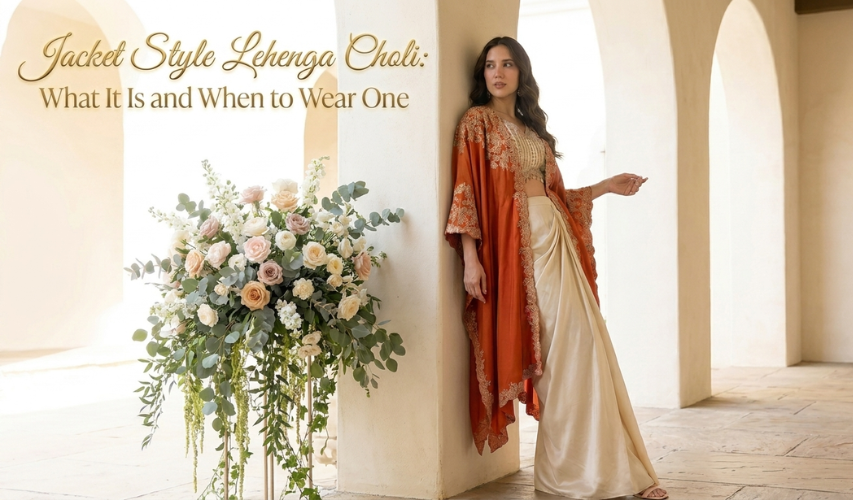
An indo western lehenga choli combines Western styles such as crop tops, dresses or draped skirts with traditional lehenga features. A traditional lehenga choli sticks to the original three-piece structure of skirt, blouse, and dupatta. The difference sits mainly in the cut, the choli style, and the amount of drape used. At Indian Cloth Store, both an Indo-western lehenga and a lehenga choli in Indo-western style are stitched to order, so the choice comes down to the occasion and the comfort level a buyer wants.
What Makes a Lehenga Choli “Traditional”
A traditional lehenga choli follows a set structure that has stayed largely unchanged for generations. It works well for weddings, religious functions, and family gatherings where a classic look is expected.
- A fitted or semi-fitted choli that covers the midriff
- A flared skirt, often with a canvas or cotton base for structure
- A dupatta draped over one shoulder or across both
- Heavier embroidery such as zari, resham, or stone work on festive pieces
The Ministry of Textiles has documented how regional embroidery styles, from Gujarat’s mirror work to Lucknow’s chikankari, still shape how traditional lehenga cholis are made today. This kind of regional detailing is one reason buyers keep returning to classic silhouettes for a bridal lehenga choli or a major family function.
What Makes a Lehenga Choli “Indo-Western”
An indo western outfit takes the same base garment and reworks one or more parts of it with a modern cut. It suits sangeet nights, cocktail parties, and receptions where guests want something festive but less formal than a wedding outfit.
- A crop top lehenga or corset instead of a fitted choli
- A pre-draped or attached dupatta that removes the need for manual draping
- A cape, jacket, or cowl-style overlay added to the skirt
- Fabric choices such as organza or net paired with sequin or thread work
Buyers who want a lighter, easier-to-wear option often move toward a designer lehenga choli in this category, especially for events with dancing or long hours on their feet.
Fabric and Colour Choices Buyers Ask About
Fabric weight and colour both affect how a lehenga choli photographs and how comfortable it feels throughout a full event. Darker shades such as a black lehenga choli or a deep red lehenga choli tend to suit evening receptions, while a pink lehenga choli or white lehenga choli works better for daytime functions and haldi ceremonies. For buyers who want heavier detailing on either silhouette, an embroidered lehenga choli adds texture without changing the base cut, and an anarkali lehenga style is worth considering for a fuller, flowing silhouette.
How to Decide Between the Two
The right choice depends on the event, the dress code, and how much movement the outfit needs to allow.
- Choose traditional for weddings, poojas, and events with elders present
- Choose an Indo-western lehenga for sangeets, cocktail parties, and receptions with a modern dress code
- Consider the venue temperature, since net and organza breathe differently than silk
- Factor in the ease of movement if the event includes dancing or standing for long hours
- A party wear lehenga choli works for both categories, depending on the cut chosen
Styling Tips for Both Silhouettes
Styling changes the final look more than most buyers expect, and small choices in accessories or draping can shift an outfit from casual to formal.
- Pair a traditional lehenga choli with statement jewellery like a choker or jhumkas
- Keep Indo-western pieces minimal on accessories since the cut already stands out
- Use a belt or waist accessory to define the silhouette on flared skirts
- Match a readymade blouse to the skirt colour if ordering separately
Why the Right Fit Matters More Than the Style
A well-fitted choli, regardless of style, changes how an outfit sits and moves throughout the day. Bureau of Indian Standards guidelines for textile sizing exist precisely because fit issues are one of the most common complaints buyers raise after a purchase. Getting measurements checked before stitching, rather than after, avoids the need for last-minute alterations closer to the event date.
Common Questions About Indo-Western Lehenga Choli
Is an Indo-western lehenga choli suitable for a wedding function?
Good for Pre-wedding activities like sangeet or mehendi, although most families choose a classic lehenga choli for the actual wedding ceremony.
Can the dupatta be skipped in an Indo-western lehenga choli?
Yes, many indo western designs have replaced the dupatta with a cape or jacket yet you can still add a light drape for a fuller effect.
Which fabric is better for summer weddings?
Georgette, organza, and net are more breathable than the heavier silks and are often selected for summer gatherings outdoors.
Both silhouettes have a place in a well-planned wardrobe, and the choice usually comes down to the event calendar rather than one style being better than the other. Indian Cloth Store stitches both traditional and Indo-western lehenga choli options to individual measurements, which keeps the fit and comfort consistent across either style.
