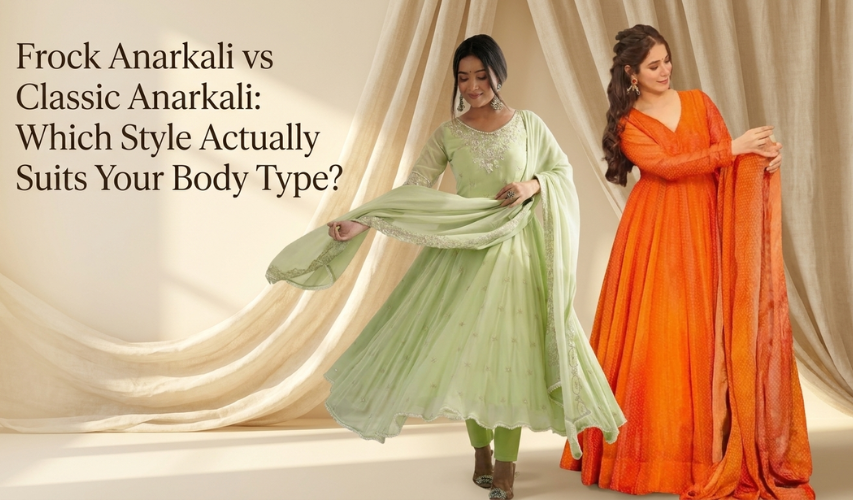
A frock anarkali suit and a classic anarkali suit look similar at first glance — both are floor-length, and both are stunning. But the silhouette, the cut, and the way each one sits on the body are completely different. Choosing the wrong one for your frame or your occasion is one of the most common mistakes Indian ethnic wear shoppers make. This guide from Indian Cloth Store breaks down exactly what sets these two apart, which body type each one flatters, and how to pick the right anarkali dress for your next event — whether it is a wedding, a festive gathering, or a formal function.
What Is a Classic Anarkali Suit?
A typical anarkali outfit consists of a long flared kurta with churidar or straight cut salwar and a dupatta. The flare begins at the waist or chest and continues in smooth, unbroken panels to the floor or ankle.
The name comes from the legendary court dancer Anarkali from Mughal history — and the silhouette itself reflects that era’s love for dramatic, graceful movement. According to the Crafts Council of India, the anarkali silhouette has been a documented part of Indian court dress since the 16th century, making it one of the oldest living fashion traditions in South Asian clothing.
Key characteristics of a classic anarkali:
- Flare from bust or empire waist
- Panels are evenly spaced and symmetrical
- Fabric options: georgette, silk, chanderi, chiffon
- Usually worn with churidar, straight salwar or palazzo trousers
- Length: Floor or knee length
What Is a Frock Anarkali Suit?
A variation is the frock anarkali suit, wherein the top part is structured like a fitted dress or bodice, like a Western frock, and then flares out dramatically from the waist or hips. It has a very modern vibe with the top being more fitted and the bottom still the traditional anarkali volume.
This technique became extremely popular because it adds structure to drama. The fitting bodice creates a definite waistline, making it a perfect choice for women who seek a more defined figure in their ethnic clothing.
Key characteristics of a frock anarkali:
- Fitted or structured bodice — similar to a dress cut
- Dramatic flare beginning from the waist or hip
- Often features heavier embellishment on the yoke and hem
- Paired with straight pants, dhoti pants, or a simple churidar
- Works exceptionally well in heavier fabrics like raw silk, velvet, and net
Frock Anarkali vs Classic Anarkali: The Core Differences
| Feature |
Classic Anarkali |
Frock Anarkali |
| Flare origin |
Chest or empire waist |
Natural waist or hips |
| Bodice structure |
Relaxed, flowy |
Fitted, tailored |
| Waist definition |
Minimal |
High |
| Silhouette feel |
Regal, flowing |
Modern, structured |
| Best occasion |
Weddings, formal events |
Parties, receptions, sangeet |
| Fabric weight |
Light to medium |
Medium to heavy |
| Body type |
Pear, rectangle, plus-size |
Hourglass, apple, petite |
Which Body Type Does Each Suit?
Best Anarkali For Following Body Types:
- Pear shape – The gradual flare from the chest down counteracts wider hips by bringing the eye upward.
- Plus-size frames – The loose top doesn’t cling, and the flowing fabric drapes into an elegant, comfortable silhouette.
- Rectangle shape – The dramatic panels add visual curves that a straight frame naturally lacks.
Frock Anarkali works well for these body types:
- Hourglass form – The fitting bodice accentuates a defined waist, making this the most attractive style for this frame.
- Apple form – Flared skirt creates proportion below, and structured top holds midsection.
- Petite frames – The waist definition elongates and makes the figure appear taller.
The National Institute of Fashion Technology (NIFT), India has a good rule: Ethnic apparel that defines the natural waist tends to shoot better and produce a stronger visual proportion regardless of body type.
Which One to Wear for Which Occasion?
Classic Anarkali is the better choice for:
- Large wedding functions, where you will be on your feet all day
- Religious ceremonies and formal pujas
- Outdoor events where you need comfort with elegance
- First-time buyers who want a versatile anarkali that works across multiple occasions
Frock Anarkali is the better choice for:
- Evening receptions and cocktail-style functions
- Sangeet and mehndi nights, where you want to stand out
- Indoor, air-conditioned venues where heavier fabric is manageable
- Women who want a more fashion-forward, dressed-up look
Fabric Guide: What Works for Each Style
The fabric you choose changes everything about how an anarkali suit drapes and moves.
For a classic anarkali, lighter fabrics work best:
- Georgette — moves beautifully, ideal for dancing and outdoor events
- Chiffon — sheer and delicate, best for summer occasions
- Chanderi — lightweight with a natural sheen, great for day functions
For a frock anarkali, the structured cut calls for fabrics that hold their shape:
- Raw silk — gives the bodice structure and photographs exceptionally well
- Net with lining — adds volume to the flared portion without weighing it down
- Velvet — best for winter weddings and evening events
At Indian Cloth Store, the anarkali suits collection includes both classic and frock styles across all these fabrics — with sizing guidance for UK, USA, and Canada customers.
How to Style Each One
Anarkali traditional style
- Keep jewellery basic – large chandbalis or jhumkas look great without overshadowing the outfit
- The flowing silhouette looks nice with the straight or low bun hair styles.
- Kolhapuri flats or block heels keep the hem from dragging
How To Style Anarkali Frock:
- The sculpted neckline is great with showy necklaces or chokers
- Embellished yoke is perfect for high buns or half-up styles
- Heels are an essential; the snug waist and flared skirt look best with more height
Quick Buying Checklist Before You Order
Before you add to the cart, ask yourself:
- Do I want my waist defined or relaxed?
- Is this for a daytime or evening occasion?
- What fabric will the venue and season allow?
- Am I shopping from the UK, USA, or Canada — do I need an international size conversion?
Indian Cloth Store provides detailed size charts and fabric descriptions on every product listing. You can also browse the full anarkali suits for women range directly.
Frequently Asked Questions
What is the difference between a frock anarkali and a regular anarkali suit?
A frock anarkali has a fitted, structured bodice like a Western dress before flaring from the waist. A regular anarkali flares continuously from the chest or empire waist without the tailored bodice structure.
Which anarkali style is better for a wedding?
For a wedding guest, a classic anarkali in georgette or silk offers all-day comfort and movement. For a reception or sangeet where you want a more dramatic look, a frock anarkali in raw silk or net is the stronger choice.
Can a frock anarkali suit be worn casually?
Yes — in lighter fabrics like cotton or chanderi and without heavy embellishment, a frock anarkali works well for festive family gatherings and semi-formal occasions.
What is the best fabric for an anarkali dress?
Georgette is the most adaptable fabric for anarkali suits. It drapes well, photographs well and flatters most body types. For heavier events, raw silk and net with lining are superior.